

In the past fifteen years, fluency in the Basque language has increased twenty percentage points among young people
Fecha de publicación:
 On the occasion of the International Basque Language Day, which will be held on 3 December, the Basque Youth Observatory is publishing data on Basque fluency levels among young people aged 15 to 29. This information is a preview of the data included in the Basque Youth survey that the Basque Youth Observatory conducts every four years; the latest edition of which, corresponding to 2016, is currently being prepared for publication.
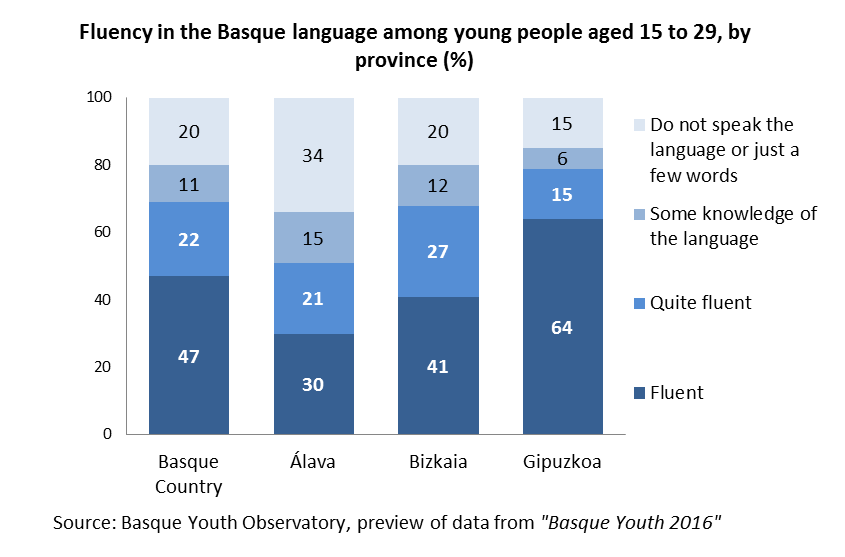
According to these data, seven out of ten young people say they are fluent or quite fluent in the Basque language (69%). However, the level of fluency regarding the Basque language is not the same throughout the Basque Country; it varies considerably from one province to another.
In Álava, 51% of young people said they were fluent or quite fluent in Basque; in Bizkaia, this percentage increased to 68%; and in Gipuzkoa, we obtained the highest figures, 79%. Furthermore, in Gipuzkoa, most people are fluent in Basque, which is not the case in the other two provinces.
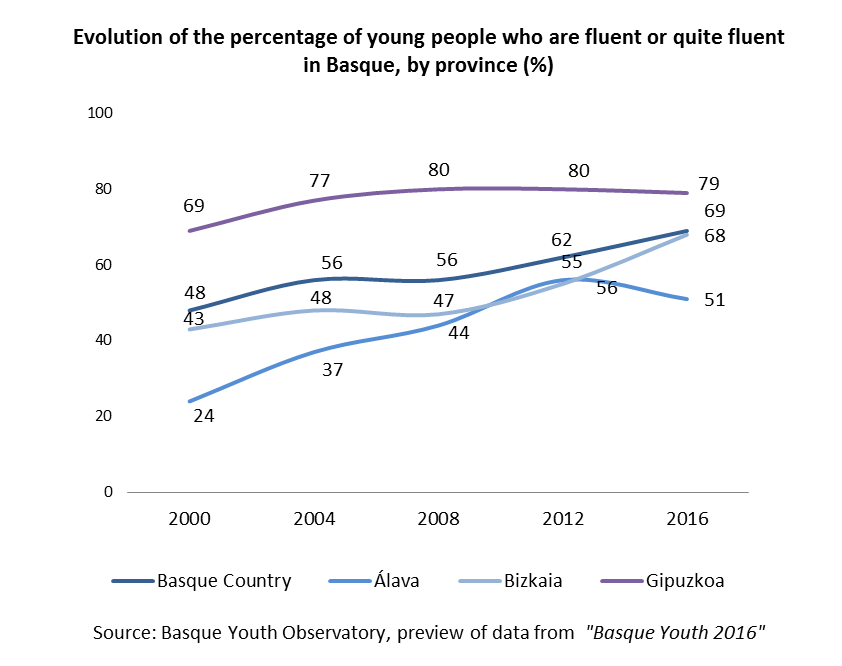
Grouping those who say they are fluent or quite fluent in Basque, we find that there has been an increase in fluency or in the ability to speak Basque among young people. A more in-depth analysis allows us to detect that this increase has taken place in Bizkaia, while the figures have remained almost unchanged in Gipuzkoa, and Álava has seen a slight fall.
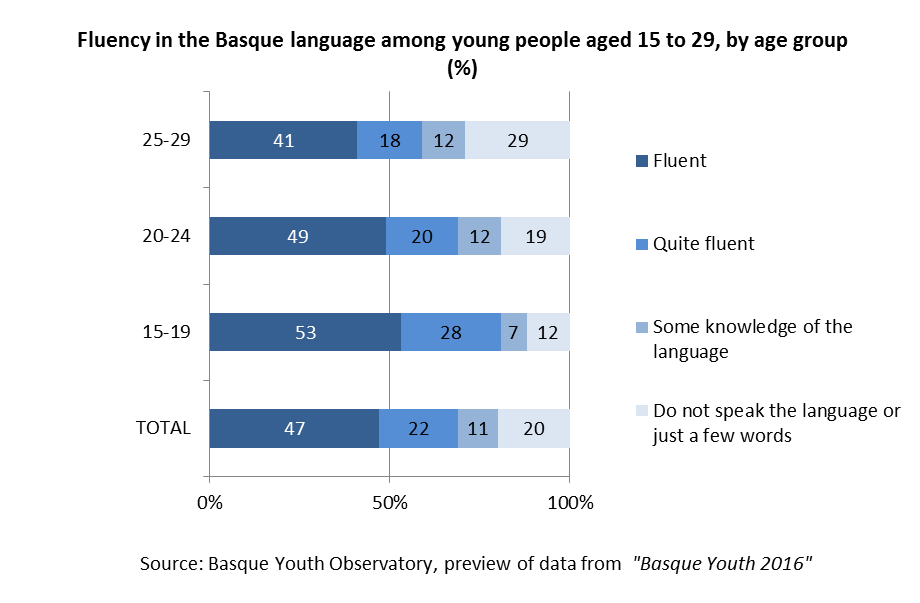
As age falls, more people say they are fluent or quite fluent in Basque. The steady increase in enrolments in linguistic models in which Basque is the vehicular language has resulted in the increase of fluency levels. The percentage of enrolments in model D courses of general non-university studies has increased from 41.2% in the 2000-2001 school year to 63.1% in 2015-2016.
Follow us on the social networks!


