May 1st. Working People's Day
On the occasion of the celebration of May 1st, the Basque Youth Observatory presents some data in relation to the employment and working conditions of the population aged 16 to 29 in the Autonomous Community of the Basque Country.
In the first quarter of 2025, the activity rate of Basque youth, i.e. the percentage of young people working or in a position to work (which means actively looking for a job in the last four weeks) is 51.7%. This means that the rest are either studying or are not working but are not available for work at the moment.
In the first quarter of 2025, the employment rate of young people aged 16-29, which measures the percentage of young people in work, is 45.8%, the same rate as the average for 2024 and above the figures recorded in previous years. This rate is slightly higher among young men than among young women (47.4% and 44.0% respectively), but it is true that the activity rate is also higher among young men (52.6%) than among young women (50.6%).
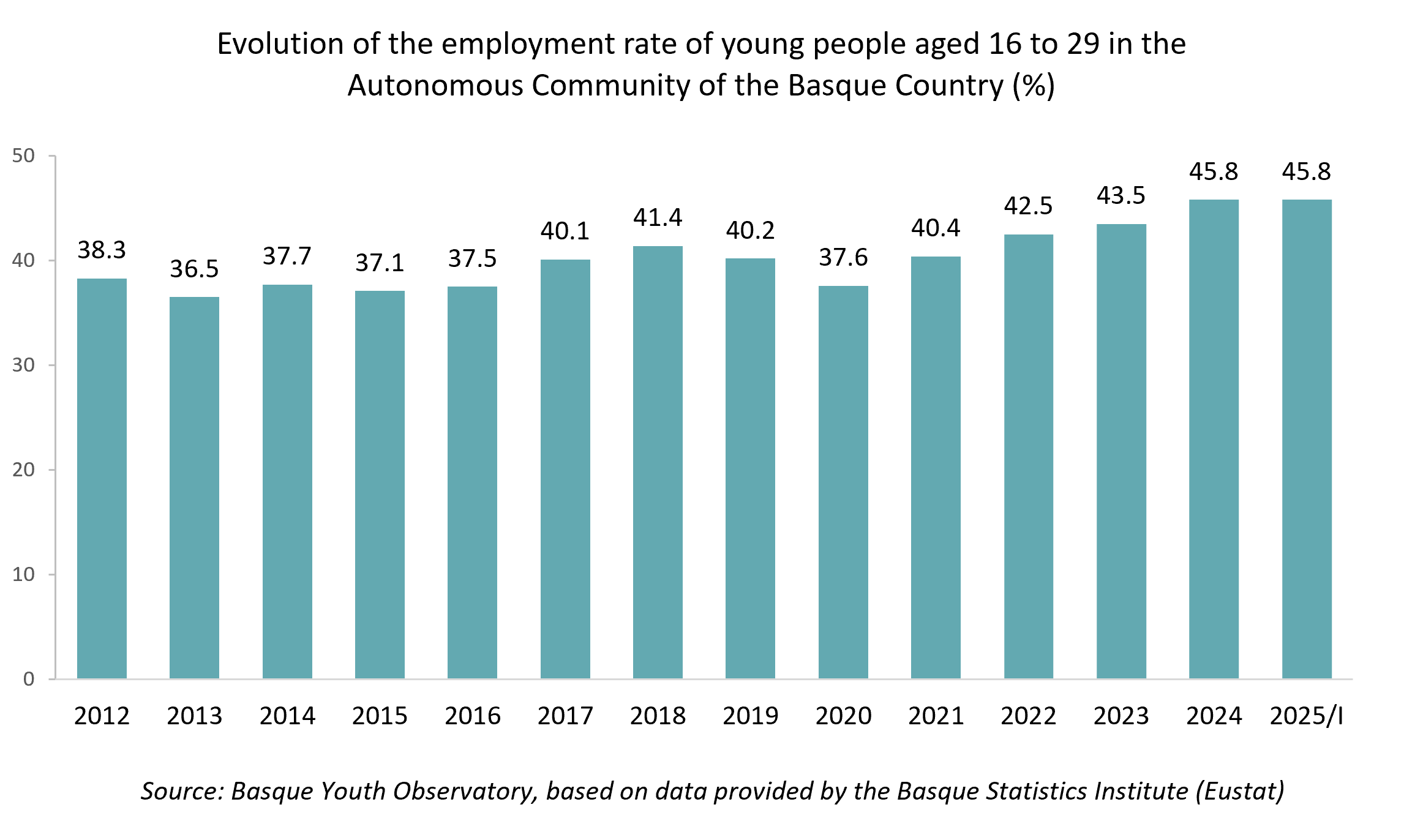
The employment rate of young people is much lower than that of the general population aged 16 and over (70.7% in the first quarter of 2025), mainly due to the involvement of young people in studies.
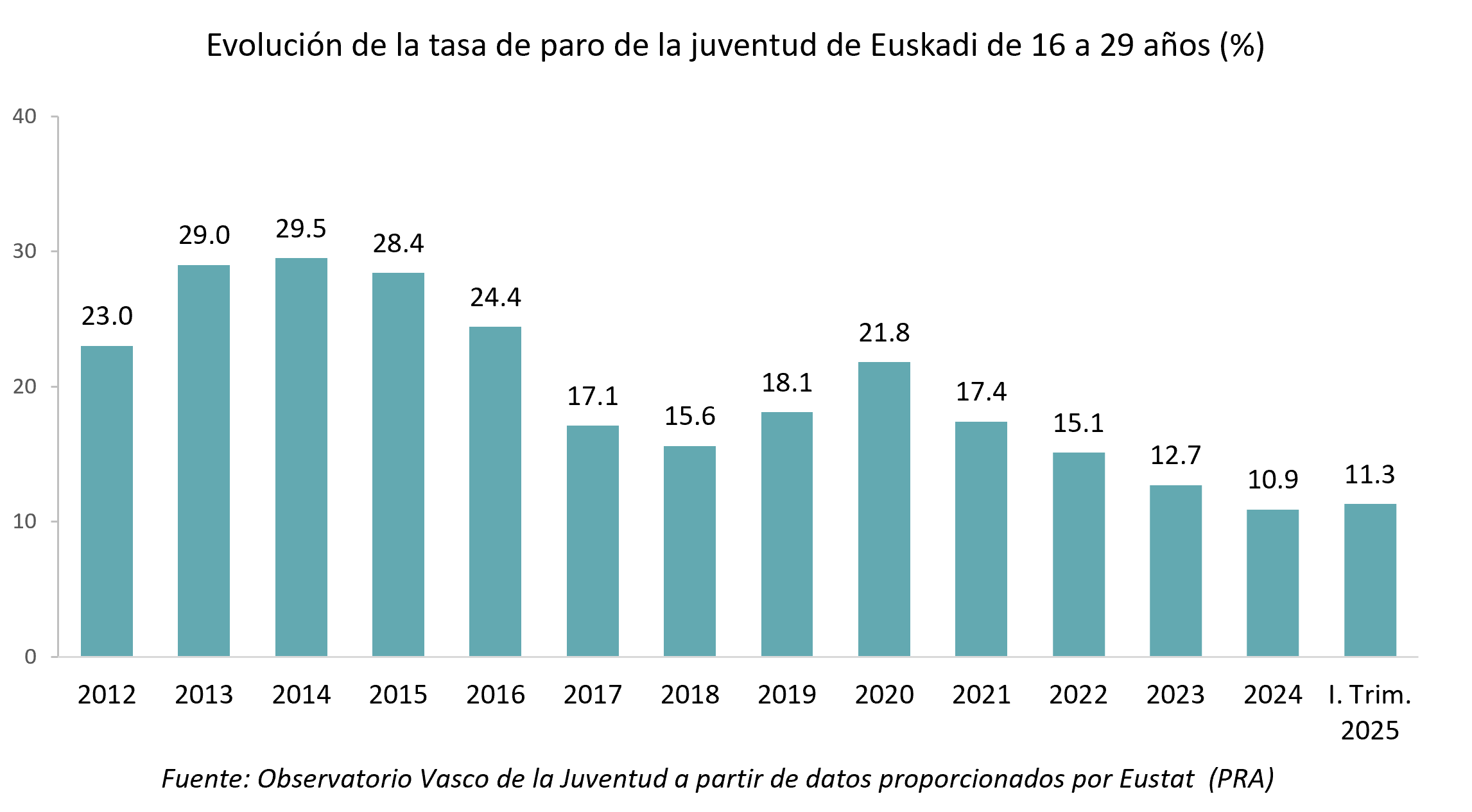
On the other hand, the unemployment rate, which expresses the percentage of active (i.e. able to work) people who do not have a job but are actively looking for one and have carried out a job search in the last four weeks, is 11.3 % among young people aged 16 to 29 in the first quarter of 2025. The latter figure is four tenths of a percentage point above the average for 2024, when the lowest rate in the series was recorded (10.9 %). In this case, the unemployment figures for young women are higher than those for young men (13.0% and 9.8% respectively).
As usual, the unemployment rate for young people is higher than the average for the whole population aged 16 and over in the Basque Country (7.0% in the first quarter of 2025).
Now, we are going to introduce some data in relation to the employment situation, taking into account the rates of temporary and part-time employment and the average salaries of young people.
The percentage of 16-29 year-olds with a temporary contract in relation to the total number of salaried young people in their age group was 40.0% in 2024. It should be noted that this rate is the lowest in the 2012-2024 series, but even so, we can still say that the rate of temporary employment among young people is double the rate for the Basque Country's salaried population as a whole (19.4%).
The decrease in the temporary employment rate of young wage earners is largely due to the entry into force, on 31 December 2021, of Royal Decree Law 32/2021 of 28 December, on urgent measures for labour reform, the guarantee of employment stability and the transformation of the labour market, which modifies the regulation of temporary contracts previously in force, with a clear reinforcement of the presumption of the indefinite nature of the employment contract.
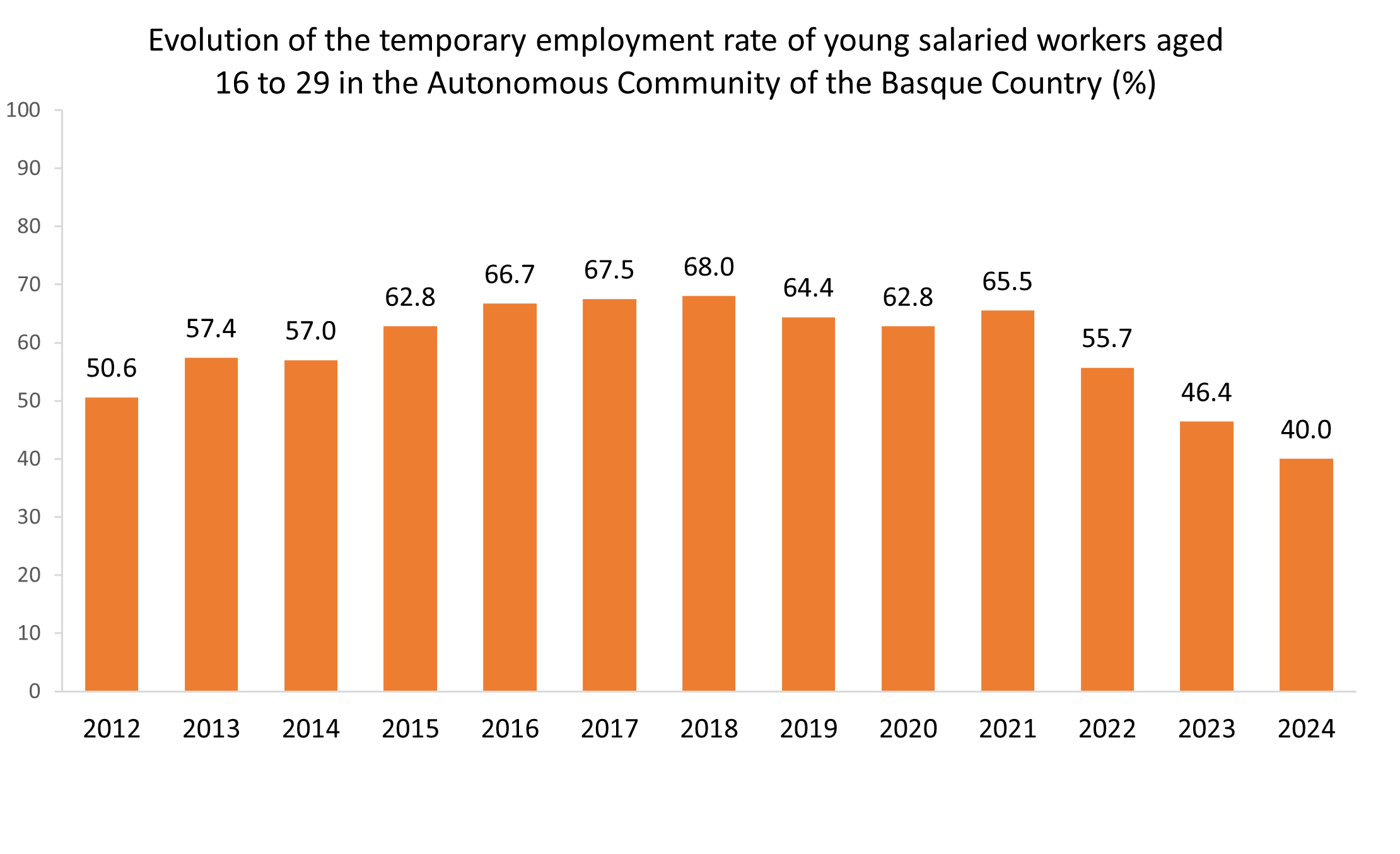
Temporariness affects more young women than young men (44.9% and 35.4% respectively in 2024) and is also more common among employees under 25 (57.2%) than among those aged 25-29 (39.1%).
On the other hand, the percentage of 16-29 year-olds working part-time (less than 30 hours per week) out of all employed people in the same age group was 32.2% in 2024, which means that one in three young people in employment works part-time. The percentage of young workers with part-time contracts has grown significantly in the last decade and has not fallen below 30 % since 2015. In the general working population of the Autonomous Community of the Basque Country, the part-time employment rate is not as high as among young people and in 2024 it stood at 17.0%.
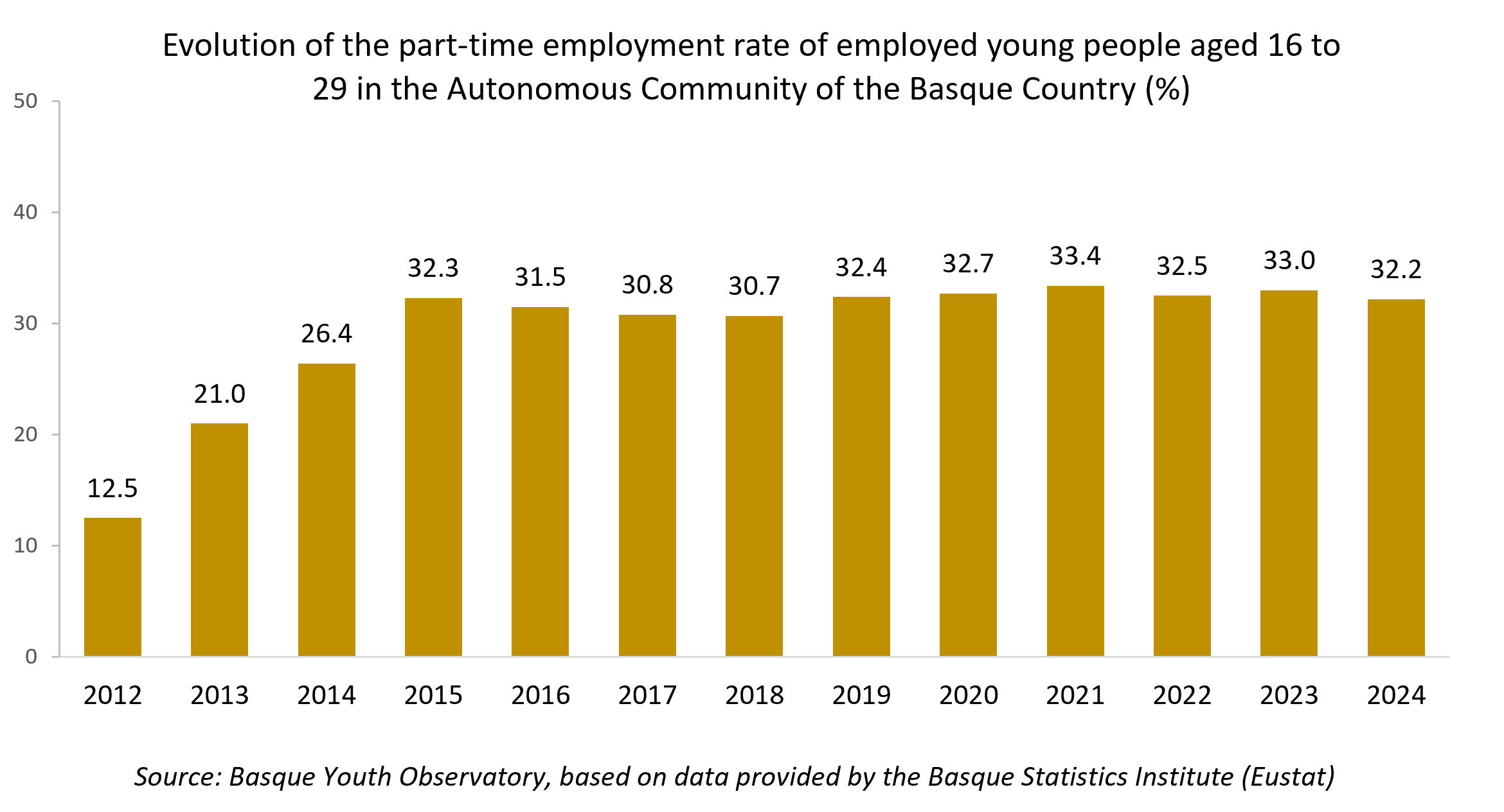


The differences between young men and young women are even more pronounced when looking at part-time contracts: in 2024, 39.5% of young women in employment worked fewer hours than the standard working hours in their job compared to 25.6% of young men, and this trend is consistent throughout the series.
Part-time work is also more prevalent among employed 16-24 year olds (47.1%) than among 25-29 year old workers (22.4%).
In terms of average monthly net wages (including two pro-rata bonus payments), employees aged 18-29 years earned, on average, 1,368€ in 2023 (latest available data). If we compare this salary with that recorded in the period 2012-2022, we see that the average salary recorded in 2023 is the highest in the period, although this rise is unlikely to be in line with price rises.
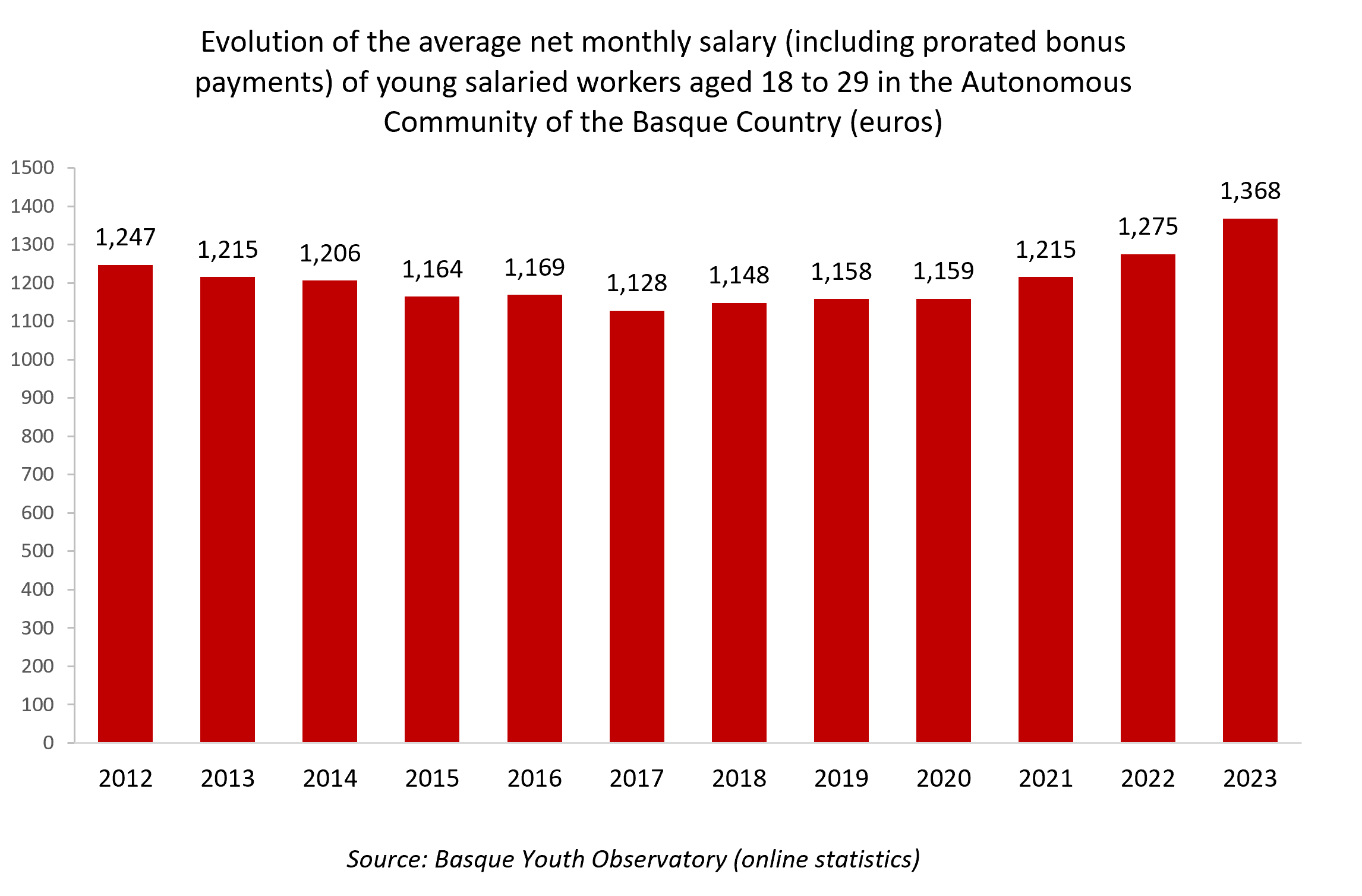
Female employees aged 18 to 29 earn, on average, lower wages than male employees of the same age (1,273€ and 1,406€ respectively in 2023). The differences by age are even greater. Employees under the age of 25 earn, on average, 1,185€ net per month, while those aged 25 to 29 earn 1,533€ per month. It should be noted, in any case, that women have more part-time jobs than men and that employees under 25 also have more short-time working hours than those aged 25 to 29, and this logically translates into average salaries, regardless of other factors such as the type of work performed, etc.
Those data are directly linked to goal 8 of the 2030 Agenda for Sustainable Development Goals: "Decent work and economic growth" and, more specifically, to target 8.5: “By 2030, achieve full and productive employment and decent work for all women and men, including for young people and persons with disabilities, and equal pay for work of equal value”.