

In 2023 this day focuses on the issue of plastic pollution
Reducing the use and impact of plastics on ecosystems is the responsibility of everyone, public administrations, companies and citizenship.
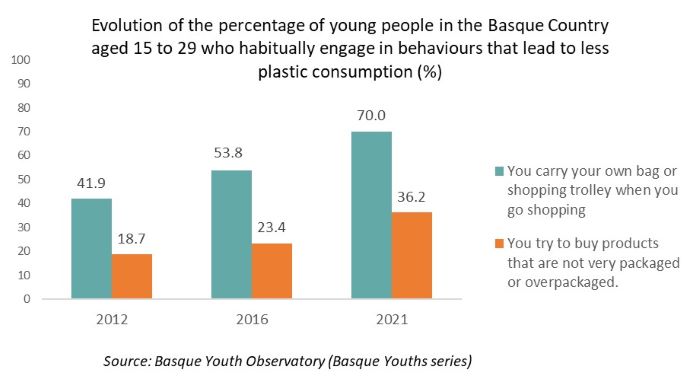
In 2021, 70.0% of young people aged 15-29 in the Basque Country said they usually carried their own bag when they went shopping. In addition, 36.2% said that they usually tried to buy products that were not very packaged or overpackaged. Both habits help to limit plastic consumption.
The percentage of young people who regularly follow these shopping habits has increased from 2012 to 2021.
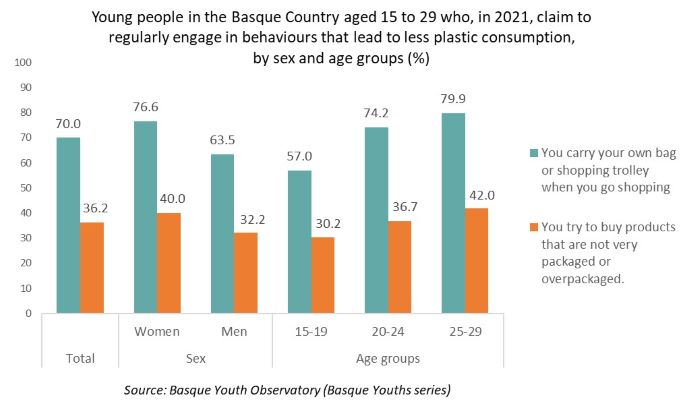
Women engage in these behaviours that involve less plastic consumption to a greater extent than men. As age increases, these shopping habits also become more common.
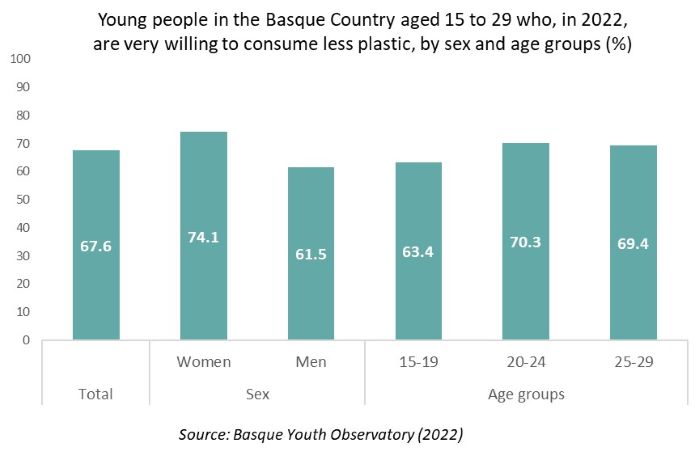
On the other hand, in 2022, young people were asked whether they were willing to reduce their consumption of plastics (bags, overpackaged products, etc.) on a regular basis. Two out of three young people (67.6%) are very willing to reduce their plastic consumption and another 27.0% are quite willing.
If we take into account the percentages of those who say they are "very willing", we see that young women are more willing than young men to reduce their use of plastics. People aged 20-29 are also slightly more willing than those under 20.
Reducing the consumption of plastics is linked to several objectives of the 2030 Agenda for Sustainable Development Goals: Responsible consumption and production (12th), Climate action (13th), Life below water (14th) and Life on land (15th).
Specifically, within goal number 12, target 12.5 states that by 2030, waste generation should be "significantly reduced through prevention, reduction, recycling and reuse".


